Exhibitions


Hôtel, été 1928 ou 29
Chapelle des Petits-Augustins, Paris, FR
2026
Press Release2026
Hôtel, Été 1928 ou 29, 2026
Sonate No. 1 (Hôtel, Été 1928 ou 29) for automated piano composed by Antoine Poudret.
Yamaha C3X Disklavier piano, MIDI file, PLA, marble powder, paint, aluminum.
93’34’’ (loop)
Variable dimensions
Courtesy of the artist
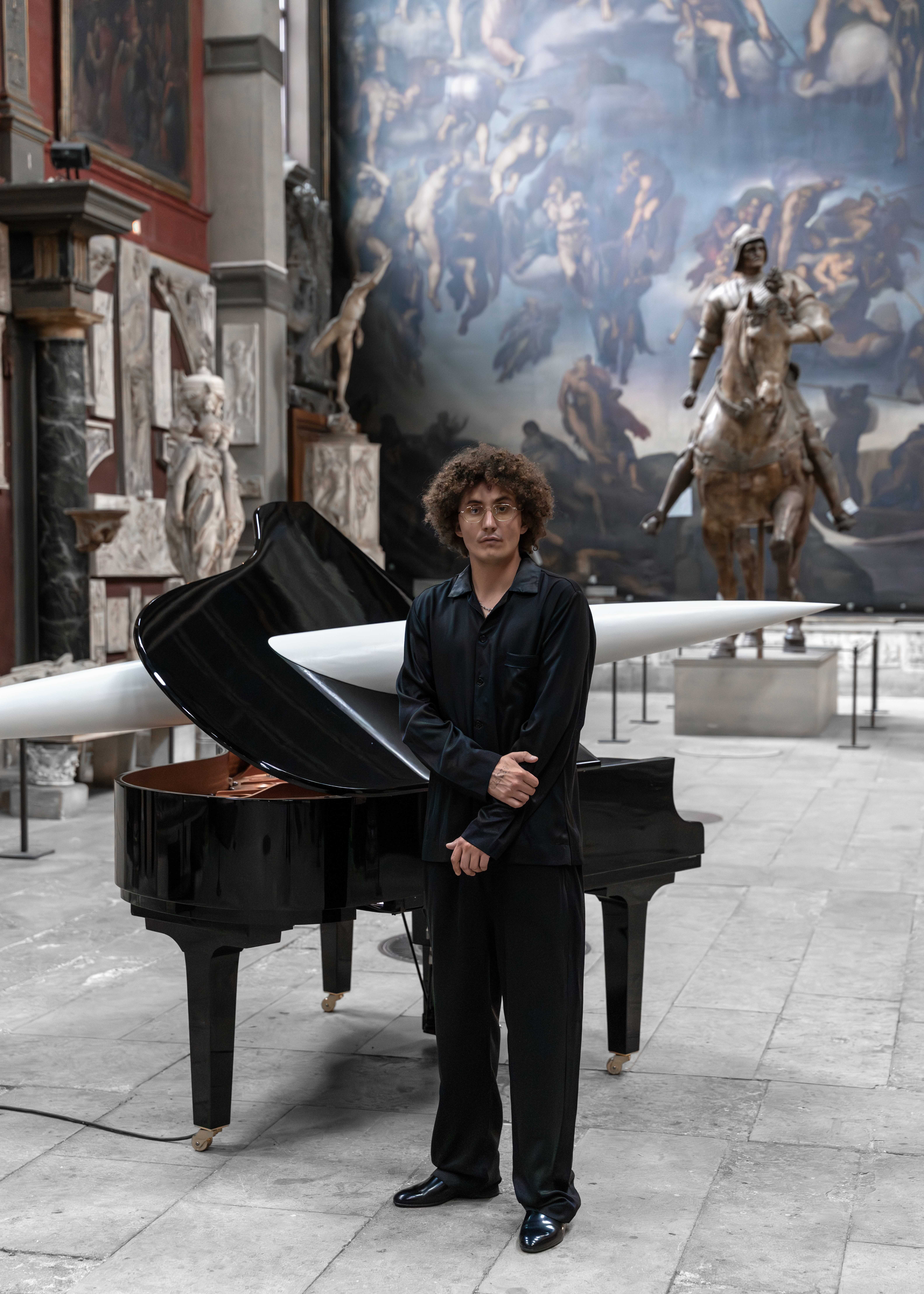
C’est en sculpteur qu’il faut voir L’Année Dernière à Marienbad, c’est du moins ainsi qu’Alain Resnais aurait souhaité que l’on découvre son film. Depuis 1961, les voix de Delphine Seyrig (A) et de Giorgio Albertazzi (X), les couloirs sans fin, les jeux d’allumettes, la géométrie des jardins et l’architecture baroque hantent le spectateur, précipitent vers l’impasse interprétative et annulent tout semblant de linéarité narrative. Le film apparaît comme la promesse perpétuelle d’une œuvre future. Entre l’étrange et le familier, il est une impulsion de pensée dont les incessants retours et appels jouent avec le temps et ses possibles infinis.
Hôtel, été 1928 ou 29 se greffe à cet entre-deux. Son titre reprend l’opacité géographique et temporelle propre à l’incertitude de L’Année Dernière à Marienbad. Depuis plusieurs années, l’artiste Clément Grimm explore l’infinité des pistes du film et s’intéresse en particulier à la mémoire de ses lieux et aux récits qu’ils retiennent. L’installation présentée ici poursuit ses recherches et recueille Marienbad comme un écho.
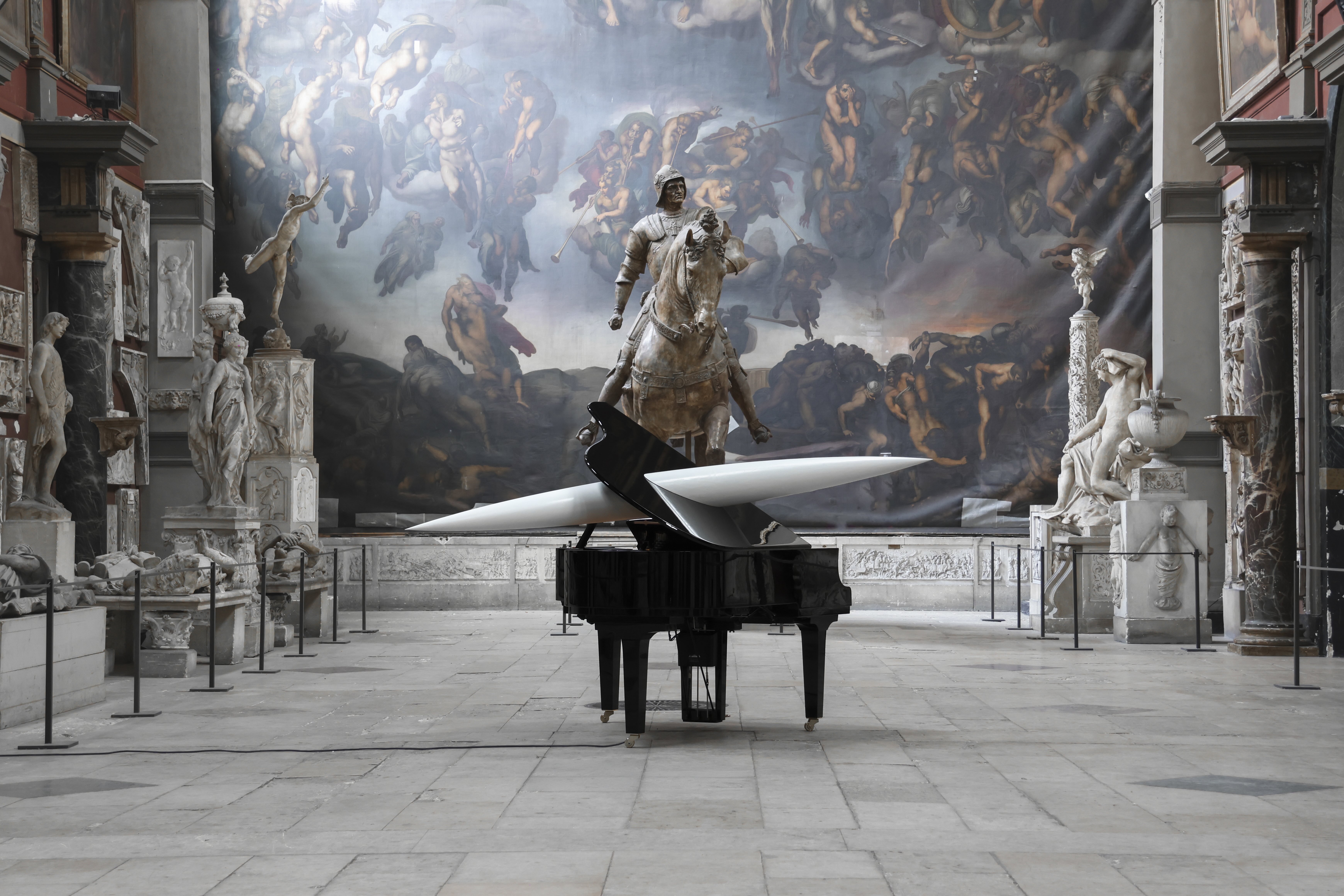
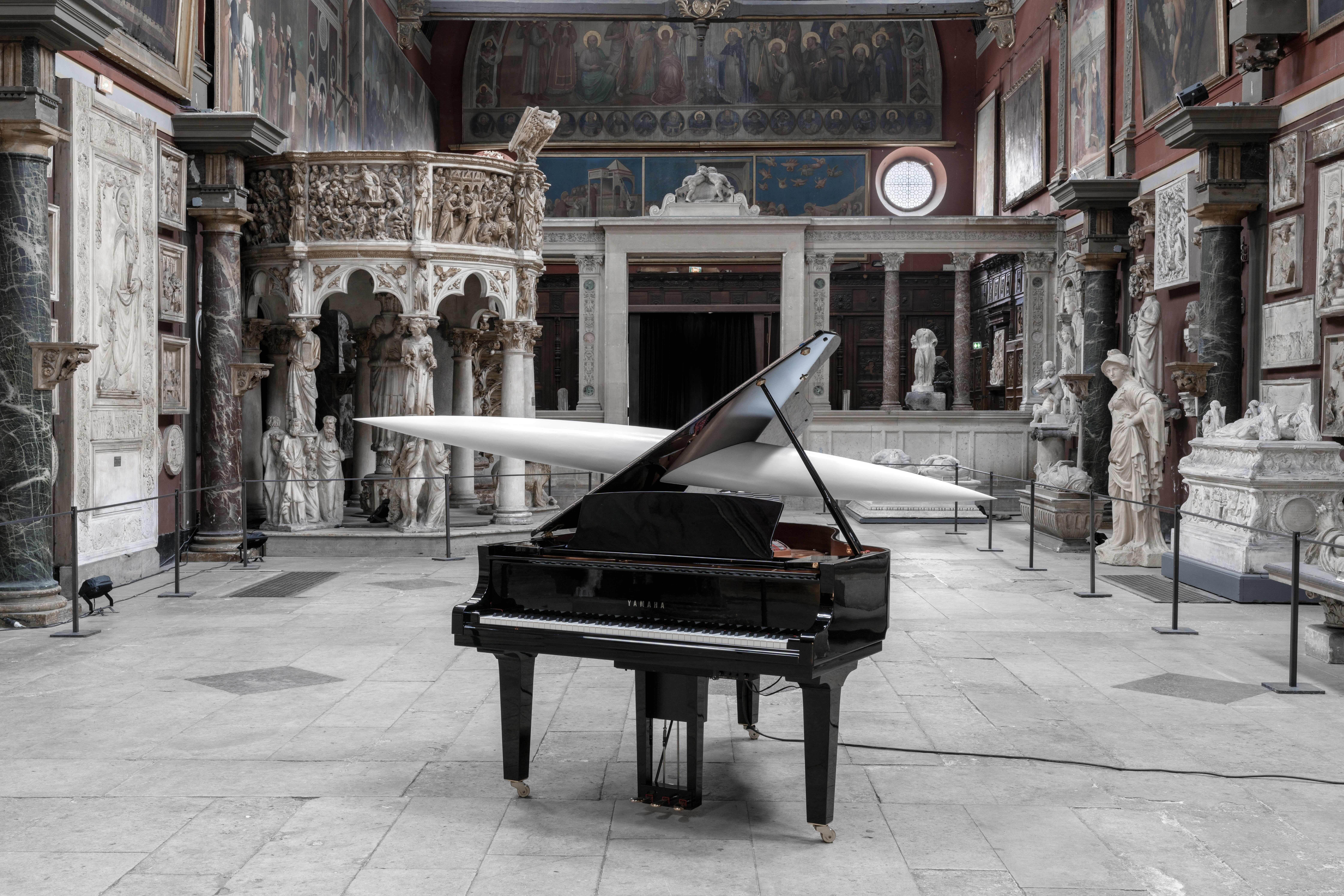
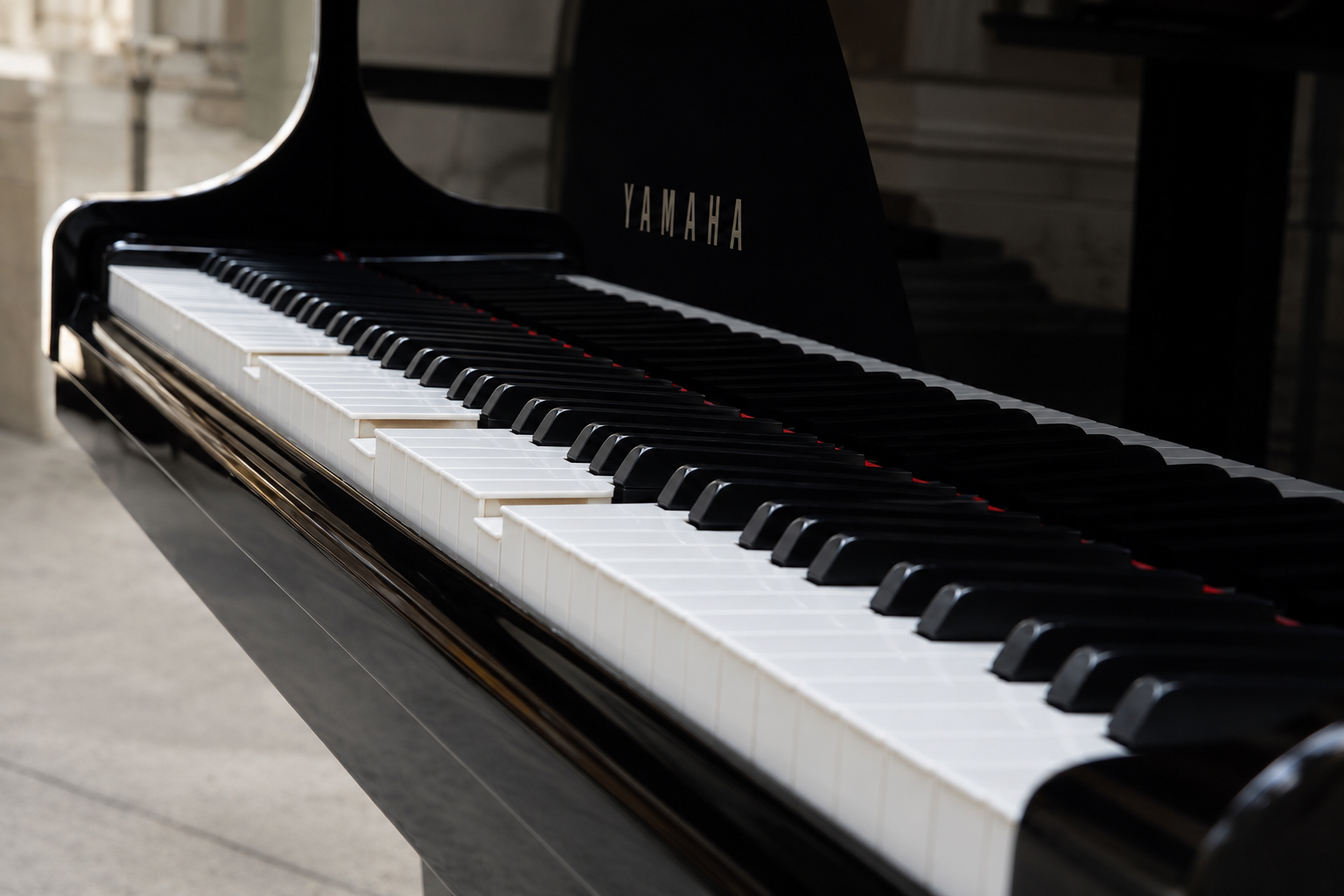
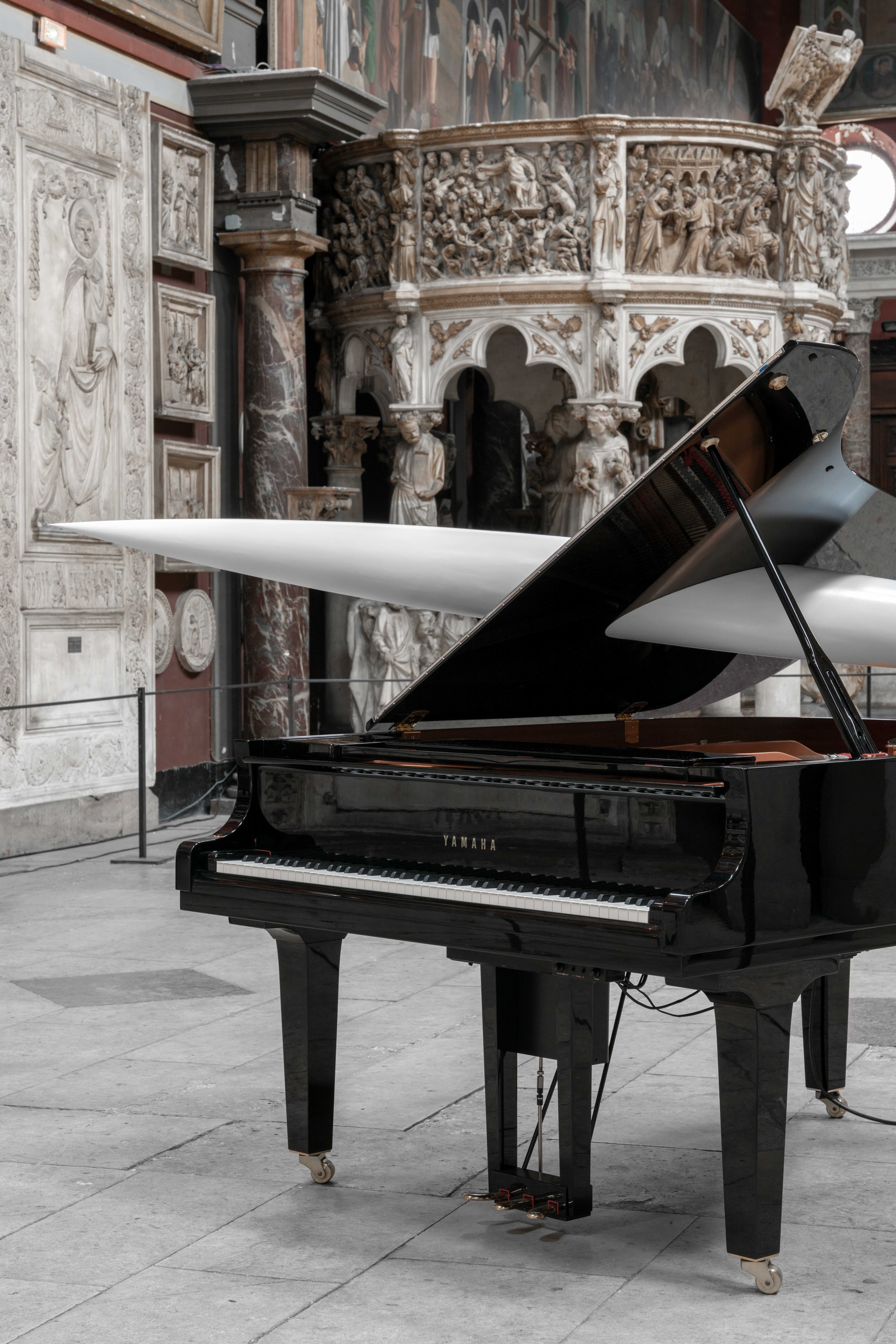
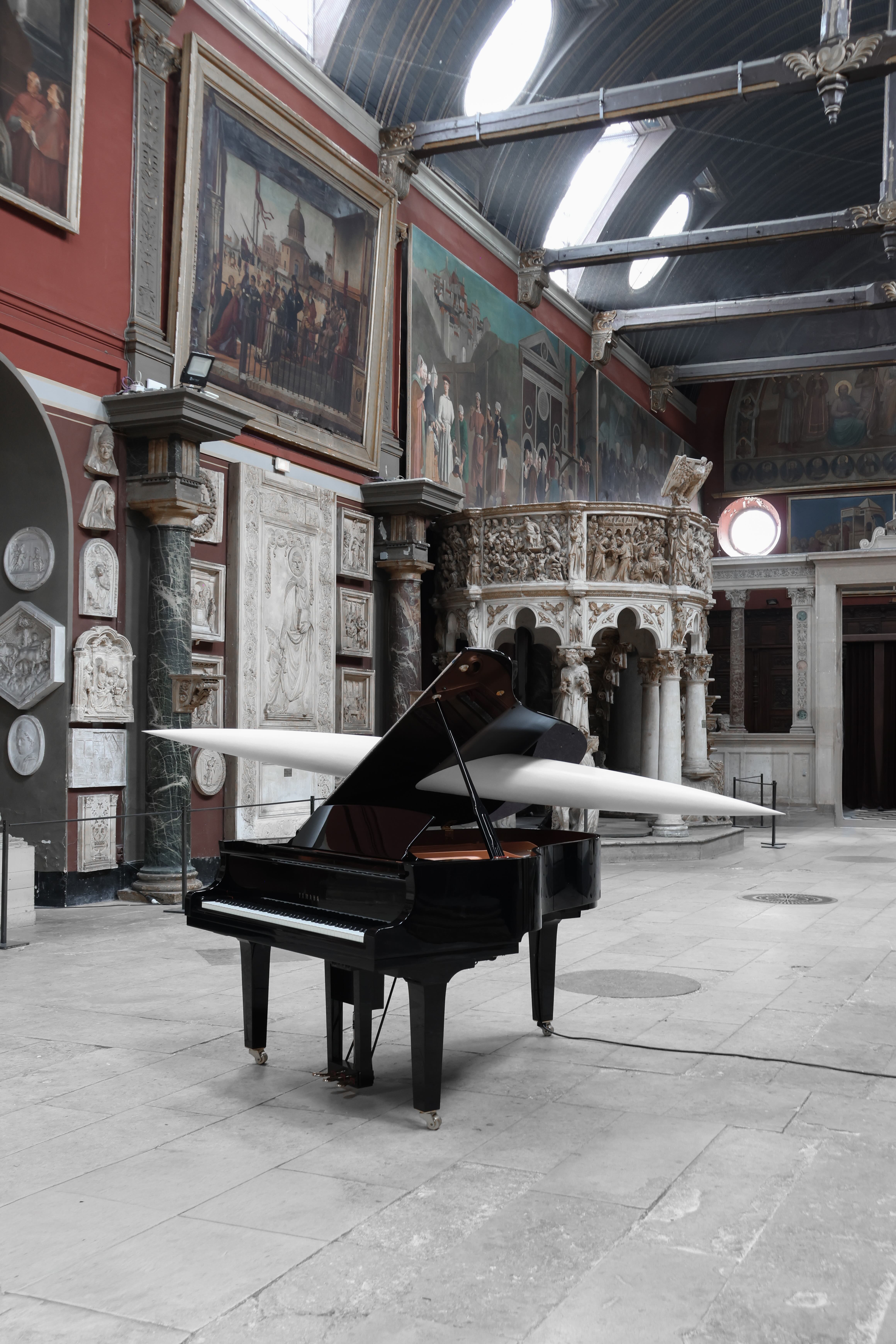
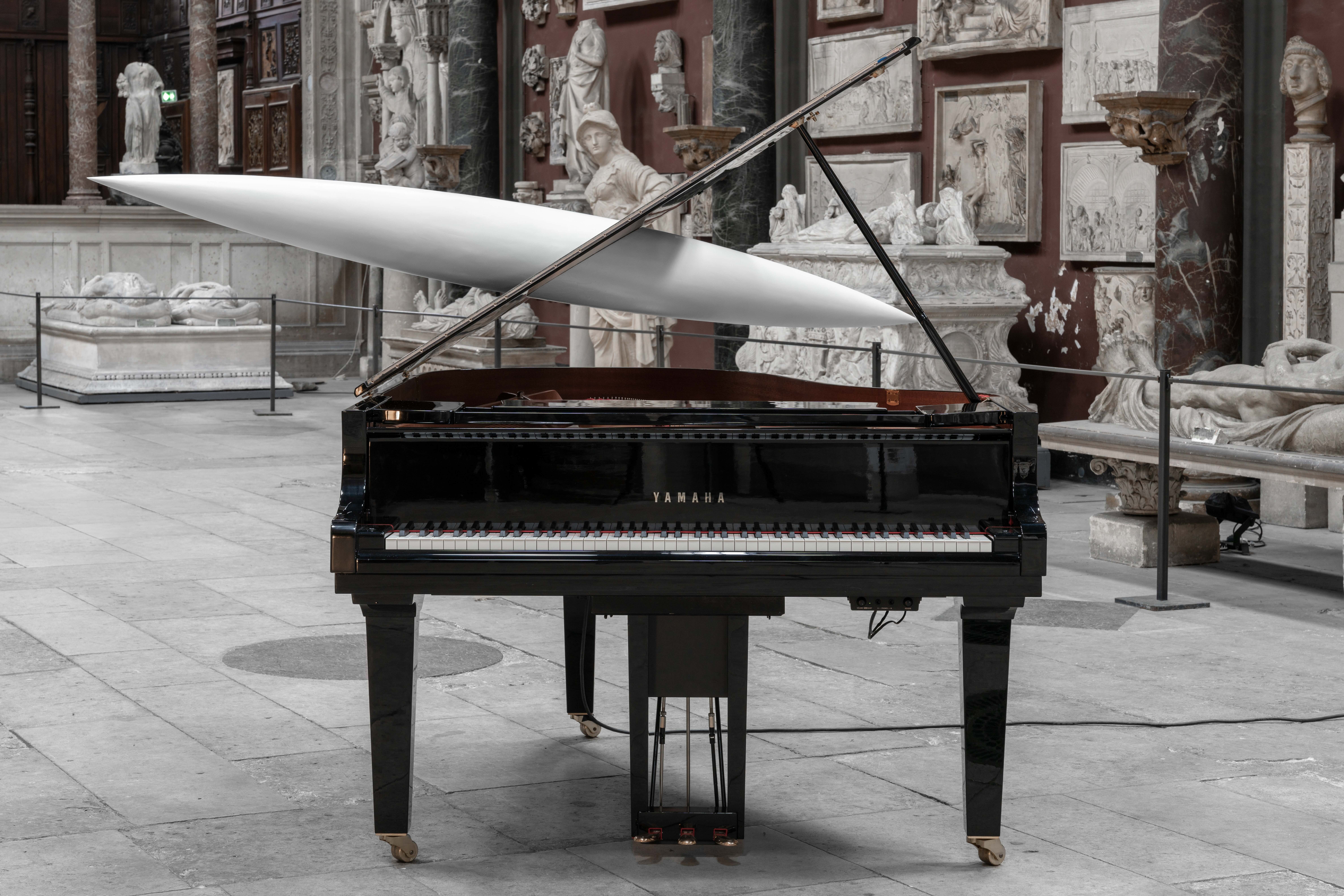
Au centre de l’espace, un piano joue un air fantôme. Les touches s’animent mécaniquement et délivrent unelongue étude pour une sonate sans soliste. De leurs creux s’élève le souffle fracturé du film, ses va-et-vient qui en composent le photogramme du temps passé, présent et imaginaire. La partition, composée par Antoine Poudret, est une réécriture intégrale de Marienbad reprenant, image par image, le film en une ligne musicale.
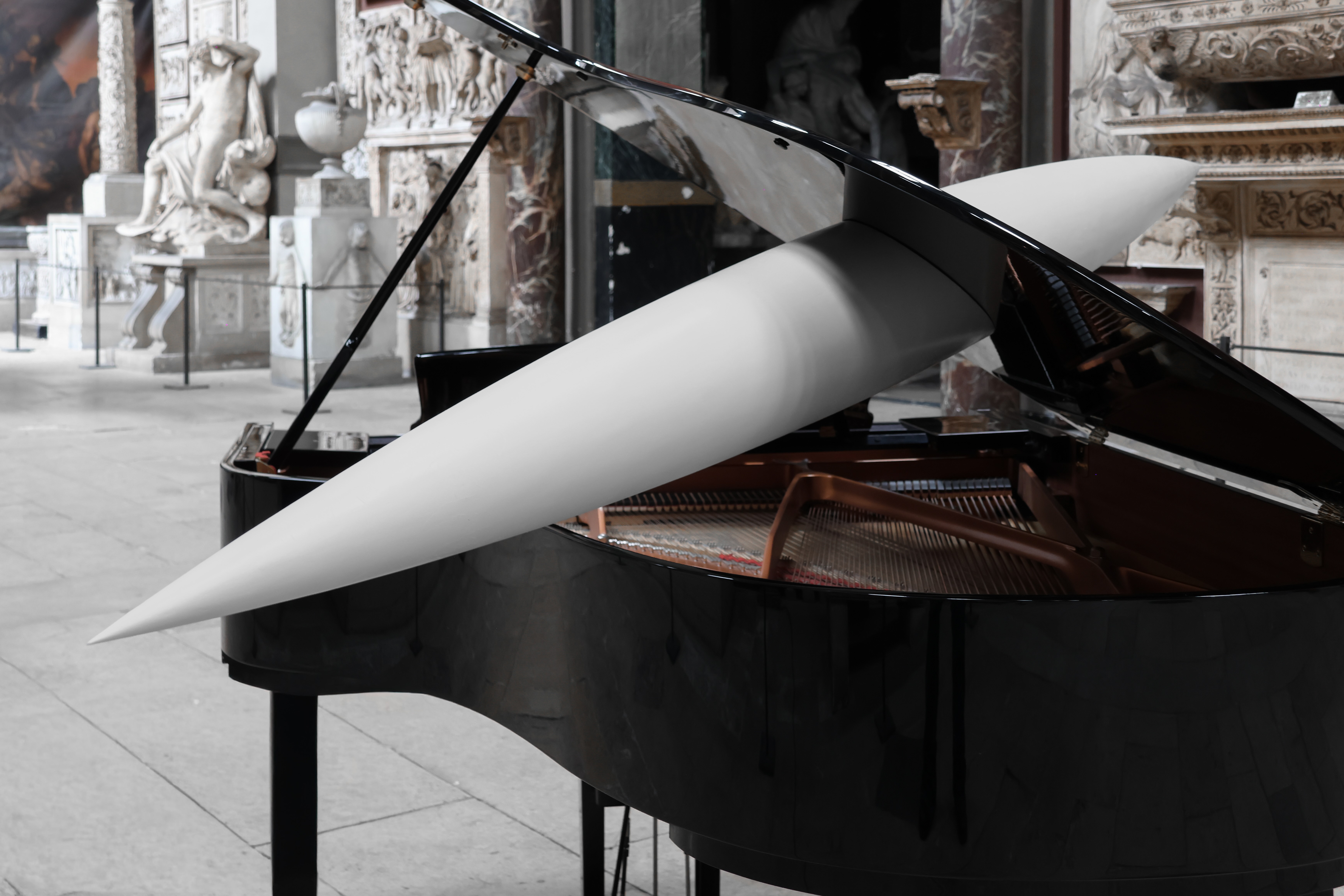
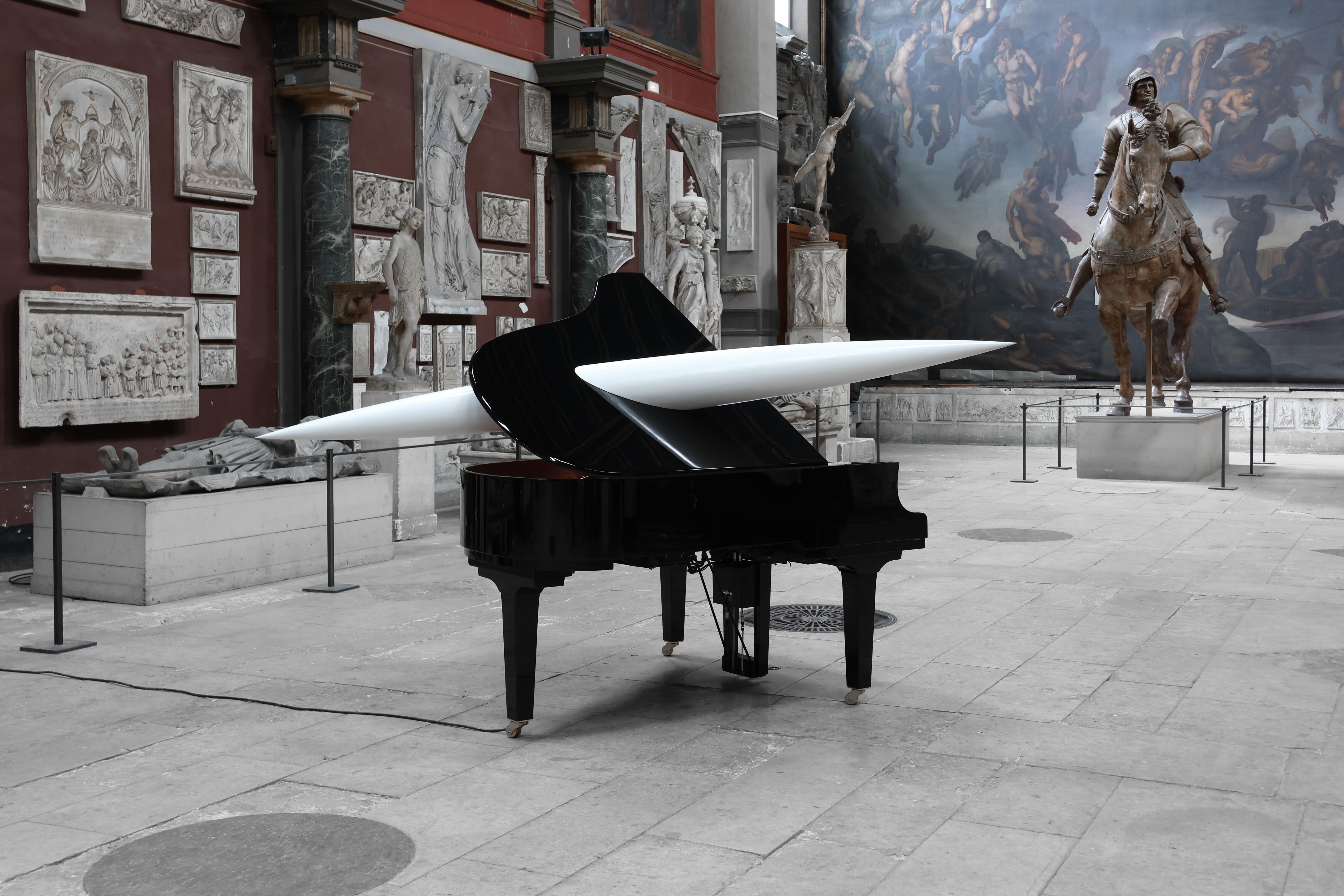
Une forme silencieuse traverse l’instrument. Elle en fend le capot et marque un arrêt, comme un marque-page planté dans le récit. Elle ne parvient pourtant pas à fixer ce qu’elle désigne. Dans Marienbad, les plans reviennent, se dédoublent et se contredisent. Le récit se disperse en échos fractals qui résistent à tout arrêt surimage. Cette tentative de coupure dans la circulation de la mémoire propre à l’objet ne l’interrompt jamais tout à fait et les mouvements de la partition se déploient sans dérive.
Baptisée Spike, cette forme est un motif récurrent dans le travail de l’artiste. Si ses dimensions et matériaux diffèrent, elle reste toujours volontairement indéfinie, comme une onde sans fonction symbolique arrêtée. Posée sur un objet ou installée dans une pièce, elle agit en faisceau perturbateur d’espace, en projectile, voire en obus. Elle modifie la lecture des lieux avec lesquels elle entre en contact. Ce déplacement de statut par la forme reprend les multiples mécanismes des œuvres de Robbe-Grillet et la convergence de son écriture avec l’esthétisme de Resnais.
L’œuvre de Grimm leur répond et n’est pas sans rappeler cette fameuse scène de film où la caméra accélère sur un travelling saccadé. Le rythme est soudain, il rompt avec la lenteur articulée que l’on connaît jusqu’alors. La caméra s’empresse dans un énième couloir, elle bifurque et pénètre dans la chambre de A avant de l’attaquer. On assiste à une orgie d’euphorie et d’extase sous vide, générées par les à-coups haletants d’une série de plans en boomerang. Tout laisse penser à un viol initié par l’œil du spectateur qui n’a pourtant rien demandé. Une intrusion double matérialisée par le Spike.
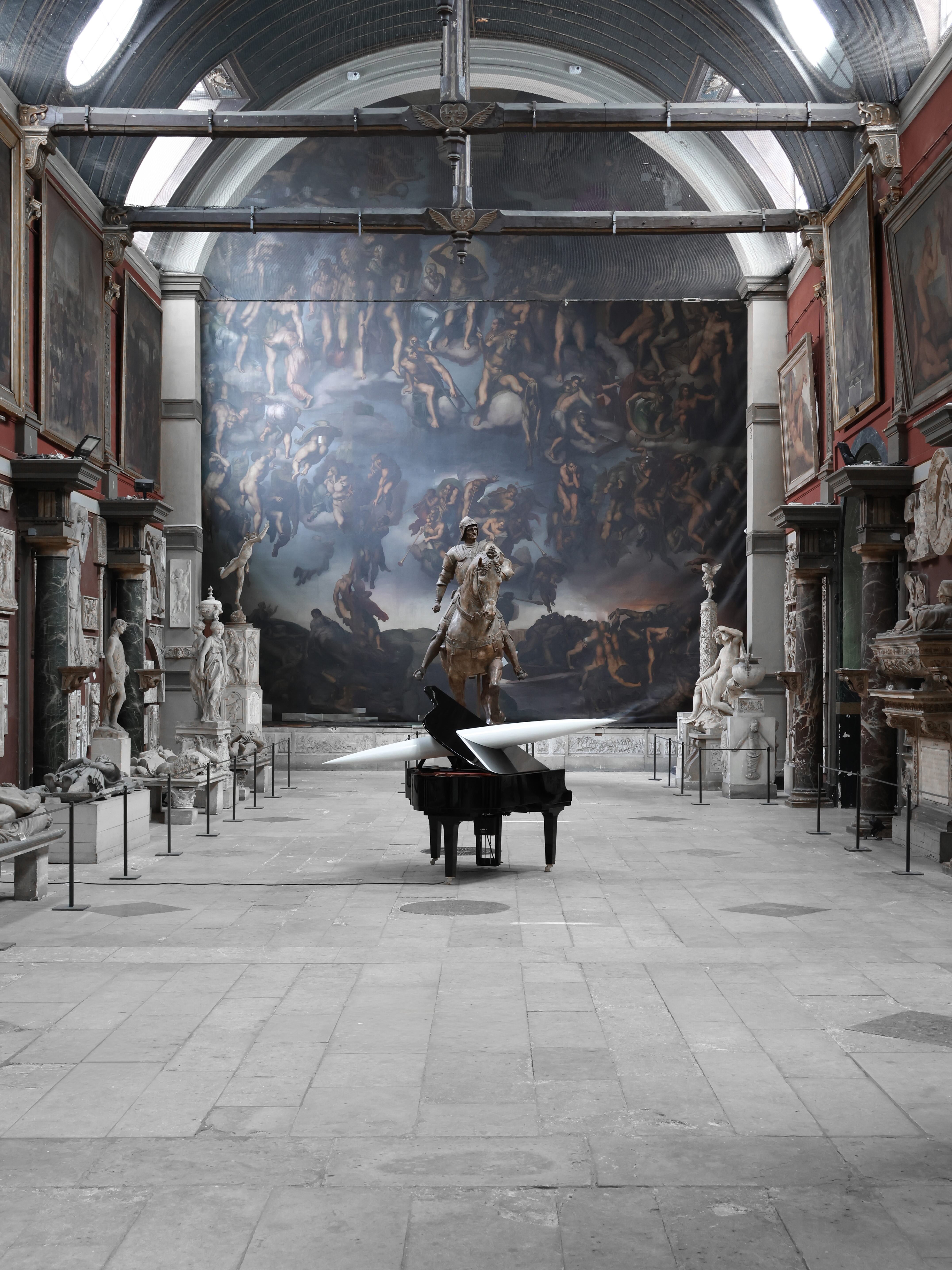
Tout comme L’Année Dernière à Marienbad, qui fonctionne comme un objet à parcourir aux milliers d’hypothèses viables, Hôtel, été 1928 ou 29 habite le spectateur par l’ouïe et l’espace. Dans le film, tout est neutre. Les murs, les jardins, les ornements et les personnages sont inertes. Ils se chargent d’une densité étrange à mesure que la caméra les traverse. La conscience du spectateur habite chaque élément.Installé dans la Chapelle des Petits-Augustins, le piano diffuse une mémoire sonore et se transforme sous le regard du visiteur. Tenterait-il de se souvenir des images du film comme A qui , disparue, tente de reconstituer sa propre mémoire ? Il se fait ainsi lieu de ruse, un espace de projections et d’hypothèses qui coexistent dans l’anachronie totale et sans hiérarchie.
Elinore Weil
Sonate No. 1 (Hôtel, Été 1928 ou 29) for automated piano composed by Antoine Poudret.
Yamaha C3X Disklavier piano, MIDI file, PLA, marble powder, paint, aluminum.
93’34’’ (loop)
Variable dimensions
Courtesy of the artist
C’est en sculpteur qu’il faut voir L’Année Dernière à Marienbad, c’est du moins ainsi qu’Alain Resnais aurait souhaité que l’on découvre son film. Depuis 1961, les voix de Delphine Seyrig (A) et de Giorgio Albertazzi (X), les couloirs sans fin, les jeux d’allumettes, la géométrie des jardins et l’architecture baroque hantent le spectateur, précipitent vers l’impasse interprétative et annulent tout semblant de linéarité narrative. Le film apparaît comme la promesse perpétuelle d’une œuvre future. Entre l’étrange et le familier, il est une impulsion de pensée dont les incessants retours et appels jouent avec le temps et ses possibles infinis.
Hôtel, été 1928 ou 29 se greffe à cet entre-deux. Son titre reprend l’opacité géographique et temporelle propre à l’incertitude de L’Année Dernière à Marienbad. Depuis plusieurs années, l’artiste Clément Grimm explore l’infinité des pistes du film et s’intéresse en particulier à la mémoire de ses lieux et aux récits qu’ils retiennent. L’installation présentée ici poursuit ses recherches et recueille Marienbad comme un écho.
Au centre de l’espace, un piano joue un air fantôme. Les touches s’animent mécaniquement et délivrent unelongue étude pour une sonate sans soliste. De leurs creux s’élève le souffle fracturé du film, ses va-et-vient qui en composent le photogramme du temps passé, présent et imaginaire. La partition, composée par Antoine Poudret, est une réécriture intégrale de Marienbad reprenant, image par image, le film en une ligne musicale.
Une forme silencieuse traverse l’instrument. Elle en fend le capot et marque un arrêt, comme un marque-page planté dans le récit. Elle ne parvient pourtant pas à fixer ce qu’elle désigne. Dans Marienbad, les plans reviennent, se dédoublent et se contredisent. Le récit se disperse en échos fractals qui résistent à tout arrêt surimage. Cette tentative de coupure dans la circulation de la mémoire propre à l’objet ne l’interrompt jamais tout à fait et les mouvements de la partition se déploient sans dérive.
Baptisée Spike, cette forme est un motif récurrent dans le travail de l’artiste. Si ses dimensions et matériaux diffèrent, elle reste toujours volontairement indéfinie, comme une onde sans fonction symbolique arrêtée. Posée sur un objet ou installée dans une pièce, elle agit en faisceau perturbateur d’espace, en projectile, voire en obus. Elle modifie la lecture des lieux avec lesquels elle entre en contact. Ce déplacement de statut par la forme reprend les multiples mécanismes des œuvres de Robbe-Grillet et la convergence de son écriture avec l’esthétisme de Resnais.
L’œuvre de Grimm leur répond et n’est pas sans rappeler cette fameuse scène de film où la caméra accélère sur un travelling saccadé. Le rythme est soudain, il rompt avec la lenteur articulée que l’on connaît jusqu’alors. La caméra s’empresse dans un énième couloir, elle bifurque et pénètre dans la chambre de A avant de l’attaquer. On assiste à une orgie d’euphorie et d’extase sous vide, générées par les à-coups haletants d’une série de plans en boomerang. Tout laisse penser à un viol initié par l’œil du spectateur qui n’a pourtant rien demandé. Une intrusion double matérialisée par le Spike.
Tout comme L’Année Dernière à Marienbad, qui fonctionne comme un objet à parcourir aux milliers d’hypothèses viables, Hôtel, été 1928 ou 29 habite le spectateur par l’ouïe et l’espace. Dans le film, tout est neutre. Les murs, les jardins, les ornements et les personnages sont inertes. Ils se chargent d’une densité étrange à mesure que la caméra les traverse. La conscience du spectateur habite chaque élément.Installé dans la Chapelle des Petits-Augustins, le piano diffuse une mémoire sonore et se transforme sous le regard du visiteur. Tenterait-il de se souvenir des images du film comme A qui , disparue, tente de reconstituer sa propre mémoire ? Il se fait ainsi lieu de ruse, un espace de projections et d’hypothèses qui coexistent dans l’anachronie totale et sans hiérarchie.
Elinore Weil
Hôtel, Été 1928 ou 29, 2026
Sonate No. 1 (Hôtel, Été 1928 ou 29) for automated piano composed by Antoine Poudret.
Yamaha C3X Disklavier piano, MIDI file, PLA, marble powder, paint, aluminum.
93’34’’ (loop)
Variable dimensions
Courtesy of the artist
We must look at Last Year at Marienbad as a sculptor would, or so Alain Resnais would have wished his film to be discovered. Since 1961, the voices of Delphine Seyrig (A) and Giorgio Albertazzi (X), the endless corridors, the games of matchsticks, the geometry of the gardens and the baroque architecture have haunted the spectator, hurrying them toward an interpretive impasse and annulling any semblance of narrative linearity. The film stands as the perpetual promise of a future work. Between the strange and the familiar, it is an impulse of thought whose ceaseless returns and recalls play with time and its infinite possibilities.
Hôtel, Été 1928 ou 29 grafts itself onto this in-between. Its title takes up the geographic and temporal opacityproper to the uncertainty of Last Year at Marienbad. For several years now, the artist Clément Grimm has been exploring the film’s infinite trails, taking particular interest in the memory of its places and the stories they hold. The installation presented here continues this research and gathers Marienbad as an echo.
At the center of the space, a piano plays a phantom air. Its keys move mechanically, delivering a long étudefor a sonata without a soloist. From their hollows rises the film’s fractured breath, its comings and goingscomposing the photogram of time past, present and imagined. The score, composed by Antoine Poudret, is a complete rewriting of Marienbad, taking up the film image by image in a single musical line.
A silent form crosses through the instrument. It splits open its lid and marks a halt, like a bookmark plantedin the narrative. Yet it fails to fix what it designates. In Marienbad, the shots return, double themselves and contradict one another. The narrative scatters into fractal echoes that resist any freeze-frame. This attempt to sever the object’s own circulation of memory never fully interrupts it, and the score’s movements unfold without drift.
Named Spike, this form is a recurring motif in the artist’s work. Though its dimensions and materials vary, it remains always deliberately undefined, like a wave with no fixed symbolic function. Set upon an objector installed within a room, it acts as a disruptive beam upon space, as a projectile, even as a shell. It altersthe reading of the places it comes into contact with. This shift in status through form echoes the manifold mechanisms of Robbe-Grillet’s works and the convergence of his writing with Resnais’s aestheticism.
Grimm’s work responds to them, and cannot fail to recall that famous scene in the film where the camera accelerates into a jolting tracking shot. The rhythm turns sudden, breaking with the articulated slowness familiar until then. The camera hastens down yet another corridor, veers off, and enters A’s room before attacking her. What follows is an orgy of euphoria and ecstasy in a vacuum, generated by the breathless joltsof a series of boomerang shots. Everything suggests a rape initiated by the spectator’s eye, which nonetheless asked for nothing. A double intrusion given material form by the Spike.
Just as Last Year at Marienbad functions as an object to be traversed through a thousand viable hypotheses, Hôtel, Été 1928 ou 29 inhabits the spectator through hearing and space. In the film, everything is neutral. Thewalls, the gardens, the ornaments and the characters are inert. They take on a strange density as the camerapasses through them. The spectator’s consciousness inhabits every element. Installed within the Chapelle des Petits-Augustins, the piano broadcasts a sonic memory and transforms itself under the visitor’s gaze. Might it be attempting to remember the film’s images, as A, vanished, attempts to reconstruct her own memory? It thus becomes a site of ruse, a space of projections and hypotheses coexisting in total, unranked anachrony.
Elinore Weil
Sonate No. 1 (Hôtel, Été 1928 ou 29) for automated piano composed by Antoine Poudret.
Yamaha C3X Disklavier piano, MIDI file, PLA, marble powder, paint, aluminum.
93’34’’ (loop)
Variable dimensions
Courtesy of the artist
We must look at Last Year at Marienbad as a sculptor would, or so Alain Resnais would have wished his film to be discovered. Since 1961, the voices of Delphine Seyrig (A) and Giorgio Albertazzi (X), the endless corridors, the games of matchsticks, the geometry of the gardens and the baroque architecture have haunted the spectator, hurrying them toward an interpretive impasse and annulling any semblance of narrative linearity. The film stands as the perpetual promise of a future work. Between the strange and the familiar, it is an impulse of thought whose ceaseless returns and recalls play with time and its infinite possibilities.
Hôtel, Été 1928 ou 29 grafts itself onto this in-between. Its title takes up the geographic and temporal opacityproper to the uncertainty of Last Year at Marienbad. For several years now, the artist Clément Grimm has been exploring the film’s infinite trails, taking particular interest in the memory of its places and the stories they hold. The installation presented here continues this research and gathers Marienbad as an echo.
At the center of the space, a piano plays a phantom air. Its keys move mechanically, delivering a long étudefor a sonata without a soloist. From their hollows rises the film’s fractured breath, its comings and goingscomposing the photogram of time past, present and imagined. The score, composed by Antoine Poudret, is a complete rewriting of Marienbad, taking up the film image by image in a single musical line.
A silent form crosses through the instrument. It splits open its lid and marks a halt, like a bookmark plantedin the narrative. Yet it fails to fix what it designates. In Marienbad, the shots return, double themselves and contradict one another. The narrative scatters into fractal echoes that resist any freeze-frame. This attempt to sever the object’s own circulation of memory never fully interrupts it, and the score’s movements unfold without drift.
Named Spike, this form is a recurring motif in the artist’s work. Though its dimensions and materials vary, it remains always deliberately undefined, like a wave with no fixed symbolic function. Set upon an objector installed within a room, it acts as a disruptive beam upon space, as a projectile, even as a shell. It altersthe reading of the places it comes into contact with. This shift in status through form echoes the manifold mechanisms of Robbe-Grillet’s works and the convergence of his writing with Resnais’s aestheticism.
Grimm’s work responds to them, and cannot fail to recall that famous scene in the film where the camera accelerates into a jolting tracking shot. The rhythm turns sudden, breaking with the articulated slowness familiar until then. The camera hastens down yet another corridor, veers off, and enters A’s room before attacking her. What follows is an orgy of euphoria and ecstasy in a vacuum, generated by the breathless joltsof a series of boomerang shots. Everything suggests a rape initiated by the spectator’s eye, which nonetheless asked for nothing. A double intrusion given material form by the Spike.
Just as Last Year at Marienbad functions as an object to be traversed through a thousand viable hypotheses, Hôtel, Été 1928 ou 29 inhabits the spectator through hearing and space. In the film, everything is neutral. Thewalls, the gardens, the ornaments and the characters are inert. They take on a strange density as the camerapasses through them. The spectator’s consciousness inhabits every element. Installed within the Chapelle des Petits-Augustins, the piano broadcasts a sonic memory and transforms itself under the visitor’s gaze. Might it be attempting to remember the film’s images, as A, vanished, attempts to reconstruct her own memory? It thus becomes a site of ruse, a space of projections and hypotheses coexisting in total, unranked anachrony.
Elinore Weil
%20copie.jpeg)
-7.jpeg)